
You’re So Golden: Why Joy is a High-Performance Strategy
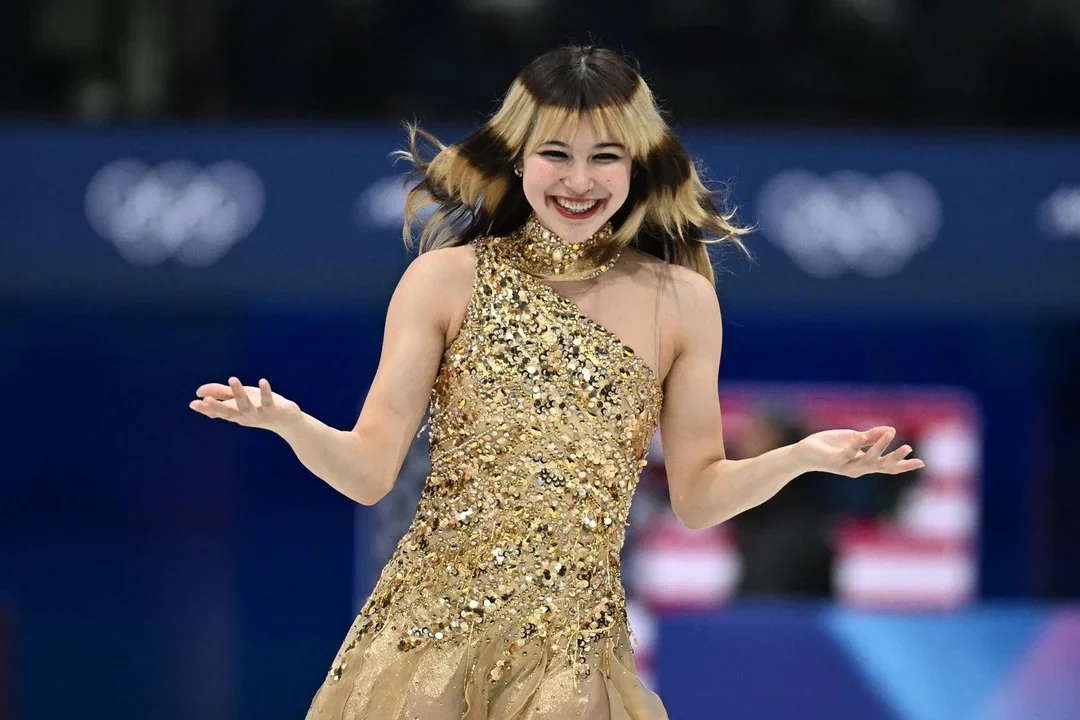
Photo credit: Slate.com
📸 [Photo: Figure skating gold medalist Alysa Liu]
Quick post outline:
The Moment That Felt Different
Alysa Liu’s Journey: Stepping Away to Come Back to Herself
A Winning Strategy: Meeting Your Needs
The Nervous System Advantage
Gentle root belief awareness
Light reference to structured action above
Your Gold Medal
The Moment That Felt Different
There was something unmistakable about Alysa Liu’s performance at the 2026 Olympics.
Her joy was palpable during her routine and immediately after. While many of the Olympic figure skaters wore expressions of seriousness or disappointment after leaving the ice, Alysa sported a beaming, toothy smile.
She blended technical mastery with joy and grace in a way that felt… different.
In the montage that played before her performance, her coach, Phillip DeGuglielmo, shared that he had actually tried to convince her not to come out of retirement. For every objection he raised, she had a reason she could do it.
What’s even more surprising? She barely competed in any events leading up to the 2026 Olympics.
So how did she make such a strong comeback?
And how did she win gold against so many other technically advanced athletes?
The answer isn’t just about skill.
It’s about the integration and balance that influence how any of us can build sustainable success.
Alysa Liu’s Journey: Stepping Away to Come Back to Herself
At age 16, Alysa retired from figure skating.
She tried new things.
She fell in love with skiing.
She got her driver’s license.
She spent time with friends.
She gave herself permission to simply be a person.
And something important happened during her time away.
The intensity, joy, and freedom she experienced while skiing reminded her of what she once loved about skating. She realized that joy could be channeled, but this time, on her terms.
By stepping away, she gained:
Perspective
Autonomy
Identity beyond performance
Emotional reset
She didn’t come back as the same athlete.
She came back as a more integrated human being.
A Winning Strategy: Meeting Your Needs
Tony Robbins describes six basic human needs:
Certainty – the need for safety, stability, predictability, and control.
Uncertainty (Novelty) – the need for variety, surprise, and new experiences.
Significance – the need to feel valued, important, or uniquely seen.
Love & Connection – the need for belonging, intimacy, and relational safety.
Growth – the need to expand, learn, and evolve.
Contribution – the need to give beyond yourself and make an impact.
When Alysa retired, she likely fulfilled the needs of novelty and growth. She expanded her identity beyond skating.
When she returned, skating met certainty and mastery. Her family cheering from the stands reflected connection. Her expressive performance met significance.
She wasn’t chasing a medal.
She was fulfilling emotional needs.
Joy wasn’t the goal.
Joy was the byproduct.
Beyond these broad human needs, each of us has highly individualized personality needs. In my coaching work, we explore a structured list of 45 personality needs and exercises to identify your top drivers. Your strongest needs are often shaped by both the biggest emotional voids in childhood and the strategies that once worked best to gain love, safety, or recognition.
Take a moment and reflect:
Which of these needs feels most fulfilled in my life right now?
Which feels chronically unmet?
When was the last time I had a truly fulfilling day, and what needs were being met? What activities helped meet them?
What healthy strategies could I begin using to support my unmet needs?
When you understand these deeper drivers, you are on a path to choosing from a place of excitement, joy, and calm, instead of fear or lack.
You stop chasing outcomes that conflict with your wiring. What you call “lack of motivation” or “self-sabotage” are often caused by neglected needs.
You start designing a life that actually supports who you are.
The Nervous System Advantage
When Alysa skated, she looked relaxed and playful.
She looked safe.
High performance doesn’t come from pressure alone. It comes from a nervous system that feels:
Safe to express
Safe to take risks
Safe to enjoy the moment
When we perform from fear, we tighten up. We overthink. We lose fluidity.
When we perform from safety and joy, we access the flow state. Creativity integrates naturally. Skills emerge without force.
Secure energy says:
“I don’t have to prove my worth. I get to express it.”
That’s what people were seeing on the ice. The same principles apply to you.
Gentle Root Belief Awareness
Even when your goals are clear and your needs are honored, something quieter can still hold you back.
Underneath hesitation is often a root belief.
“If I fail, it means I’m not capable.”
“If I’m seen, I’ll be judged.”
“If I slow down, I’ll fall behind.”
“If I succeed, I’ll lose connection.”
These beliefs aren’t dramatic on the surface. They’re subtle. Protective. Often formed early.
And they quietly shape how safe success feels.
Gentle awareness is powerful here. Instead of forcing confidence, ask:
What am I afraid would happen if this actually worked?
If that happened, what would it mean about me?
Keep following the thread until you find the deeper meaning.
You don’t have to attack the belief. You don’t have to bulldoze it.
Just seeing it clearly begins to loosen its grip.
Safety increases honesty.
Honesty increases freedom.
In coaching, awareness is a beautiful first step. We gently work with these beliefs at the subconscious level: identifying their origin, understanding the need they were trying to protect, and gradually installing new beliefs that feel both true and safe. Tools like structured belief reprogramming and nervous system regulation help this shift become embodied, not just intellectual.
Because insight alone is powerful.
But integration is what creates lasting change.
A Light Return to Structured Action
Once your needs are aligned and your root fears are named, action no longer feels like self-betrayal.
It feels like expression.
This is where structure becomes supportive rather than overwhelming. Small, consistent steps build trust with your nervous system over time. Not because you’re forcing yourself forward, but because you’re proving to yourself that growth can feel safe.
Integration first.
Then action.
That’s the order.
Your Gold Medal 🥇
Your gold medal might not be on an Olympic podium.
It might look like:
Feeling safe in relationships
Trusting yourself
Showing up without chronic anxiety
Building a life that feels like yours
Following your bliss isn’t indulgent.
It’s nervous system regulation.
It’s integration.
It’s sustainability.
When your emotional needs are met, your nervous system supports you instead of fighting you.
That’s the real gold.

Photo credit: CNN
📸 [Photo: Figure skating gold medalist Alysa Liu]
